
Bespoke
Bespoke linear lighting
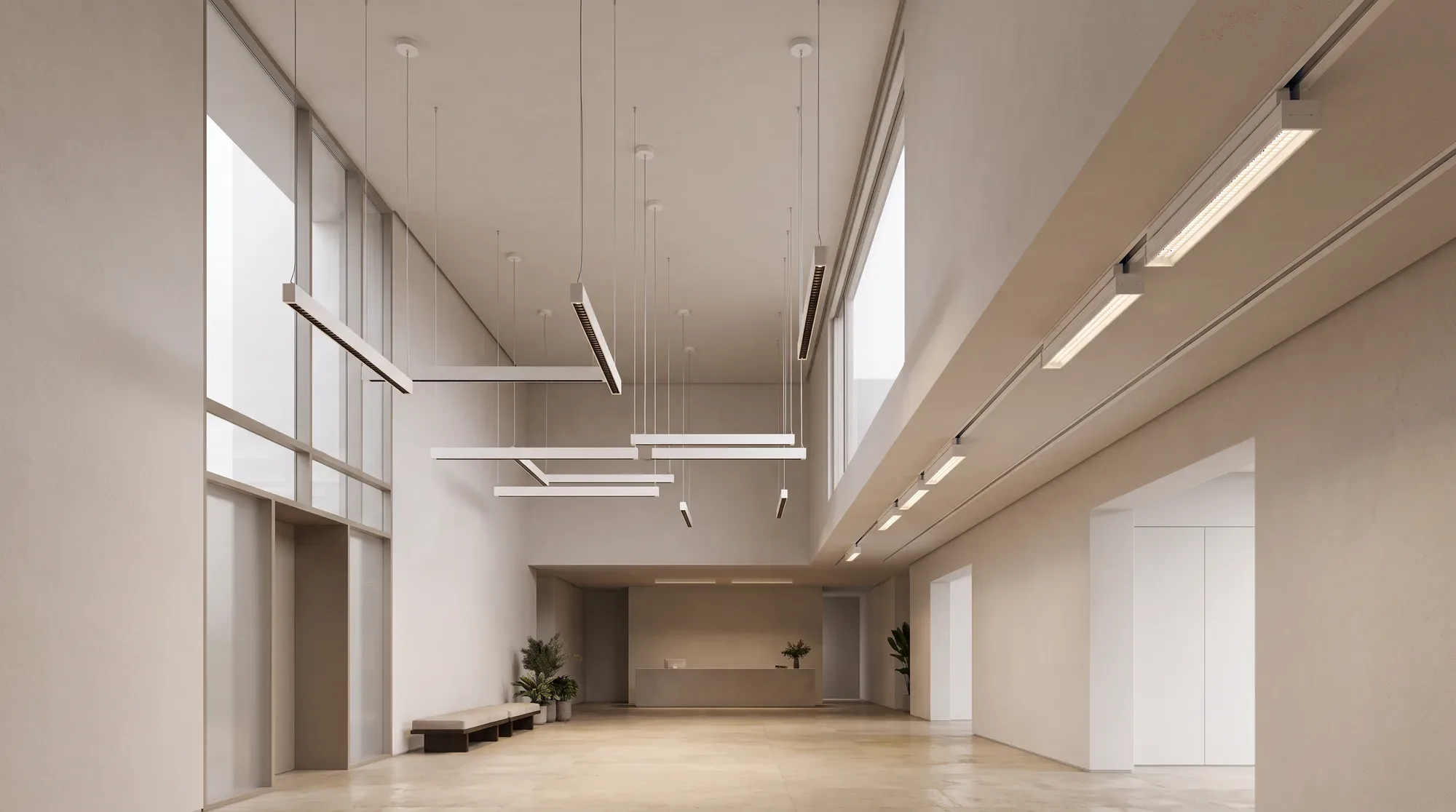
Some projects do not fit a reference. The response is then drawn with the architecture, the uses and the constraints of the place.
The starting point
The project comes before the reference.
Bespoke does not mean outside the catalogue. It means starting from the need, checking what exists and drawing only what is missing.
- Study
- Coordination
- Response
What needs a specific response
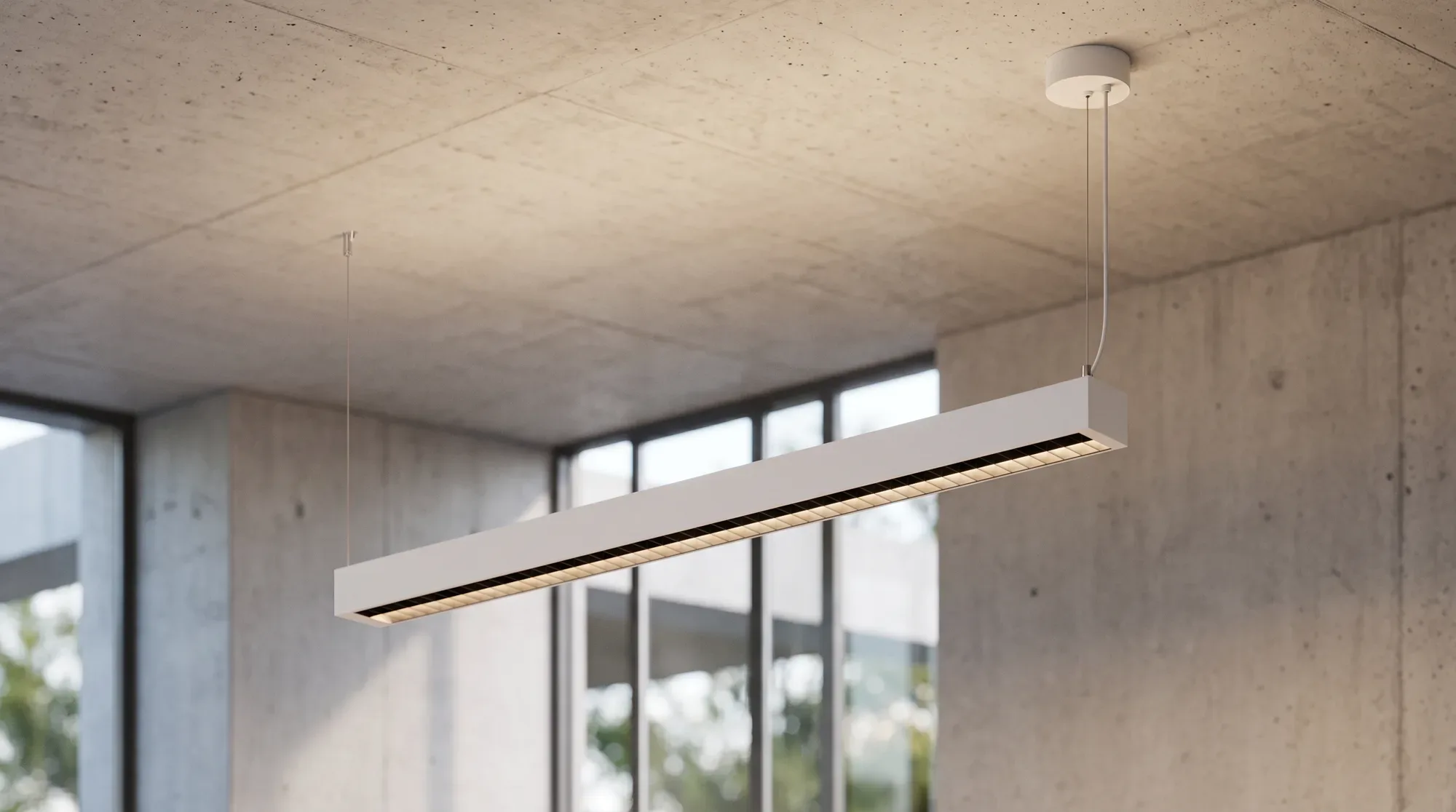
An unusual curve, a constrained height, a grid that matches no standard length: bespoke starts with a gap.
That gap may concern geometry, fixing, finish or the way light is integrated into the support.
What the project decides
Plans, sections and installation constraints set what is possible. Dialogue with the architect and the contractor defines what has to be drawn.
Bespoke is not an end in itself. If a catalogue reference meets the need, it remains the best base.
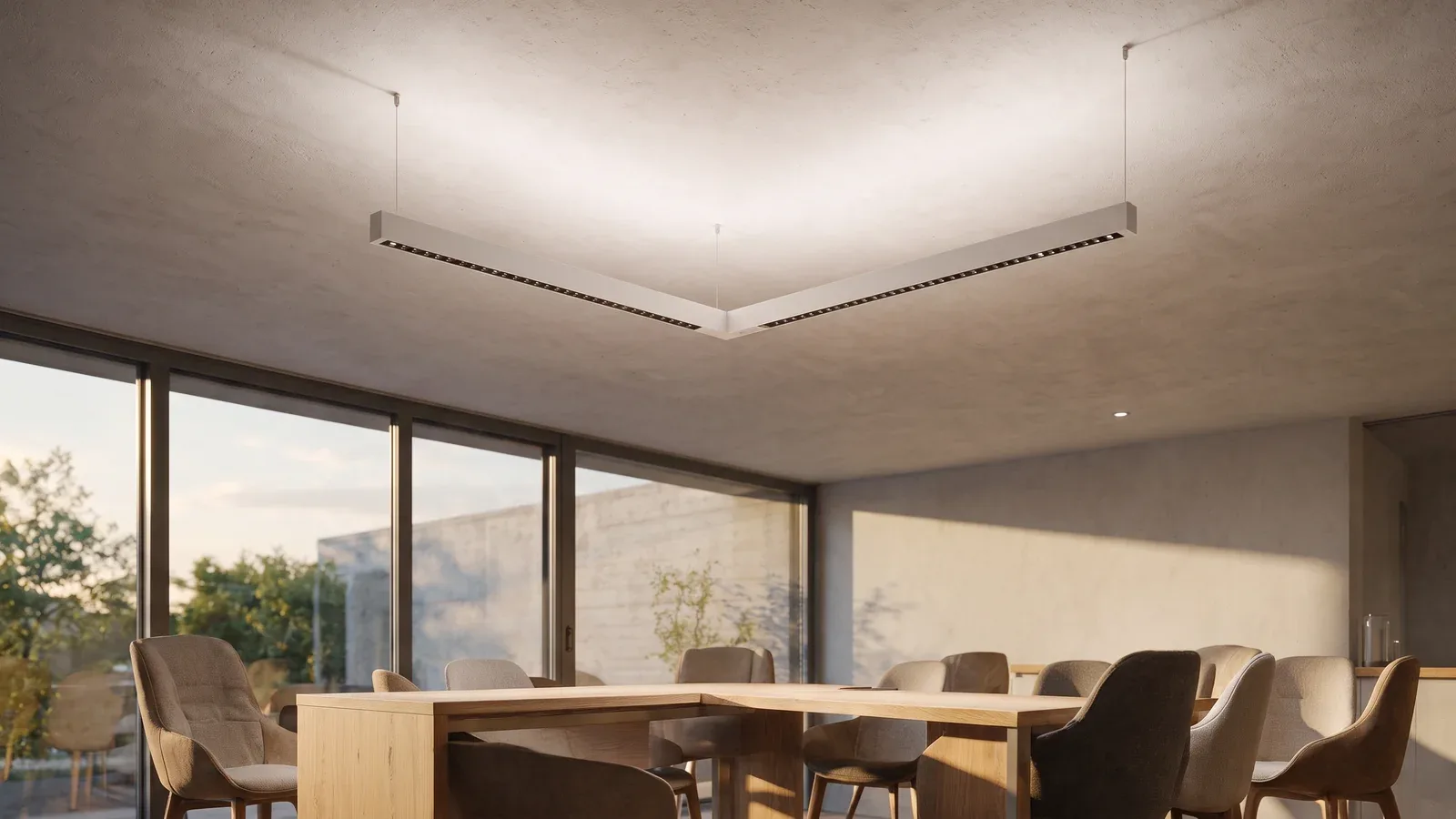
Bespoke is justified by a real gap, not by a preference.
How it is approached
The context, plans and intentions are gathered first. What the catalogue already covers, and what needs adaptation, is then checked.
The solution is built in stages, with approvals before fabrication and a clear installation plan.
What to avoid
- Asking for bespoke work without checking the catalogue, fixing a solution before the final plans, and letting installation decide the drawing.
- A poorly framed specific response costs more than a well-chosen reference.
References and adaptations.
Real Tualuce catalogue pages. Adaptation is defined with the project team.

Support for your lighting project.
Lighting advice, lighting studies and customised projects to inform lighting choices based on the architecture and intended uses.
Lighting advice
Discuss the lighting intentions and needs of your project.
Lighting studies
Develop the lighting approach in relation to the architecture and its uses.
Customised projects
Explore a response shaped around the context and direction of your project.
Frequently asked questions
When should bespoke lighting be considered?
When a constraint of geometry, fixing, finish or integration finds no answer in the catalogue. The need is checked before drawing.
Is the catalogue always studied first?
Yes. An existing reference is the strongest base. Bespoke work covers what it does not.
Which information speeds up the study?
Plans, sections, installation constraints, intended finishes and the project schedule.
Give the project its answer
Tualuce studies with you the linear response suited to your project.
Explore the Tualuce catalogue