
Lines
Continuous linear lighting
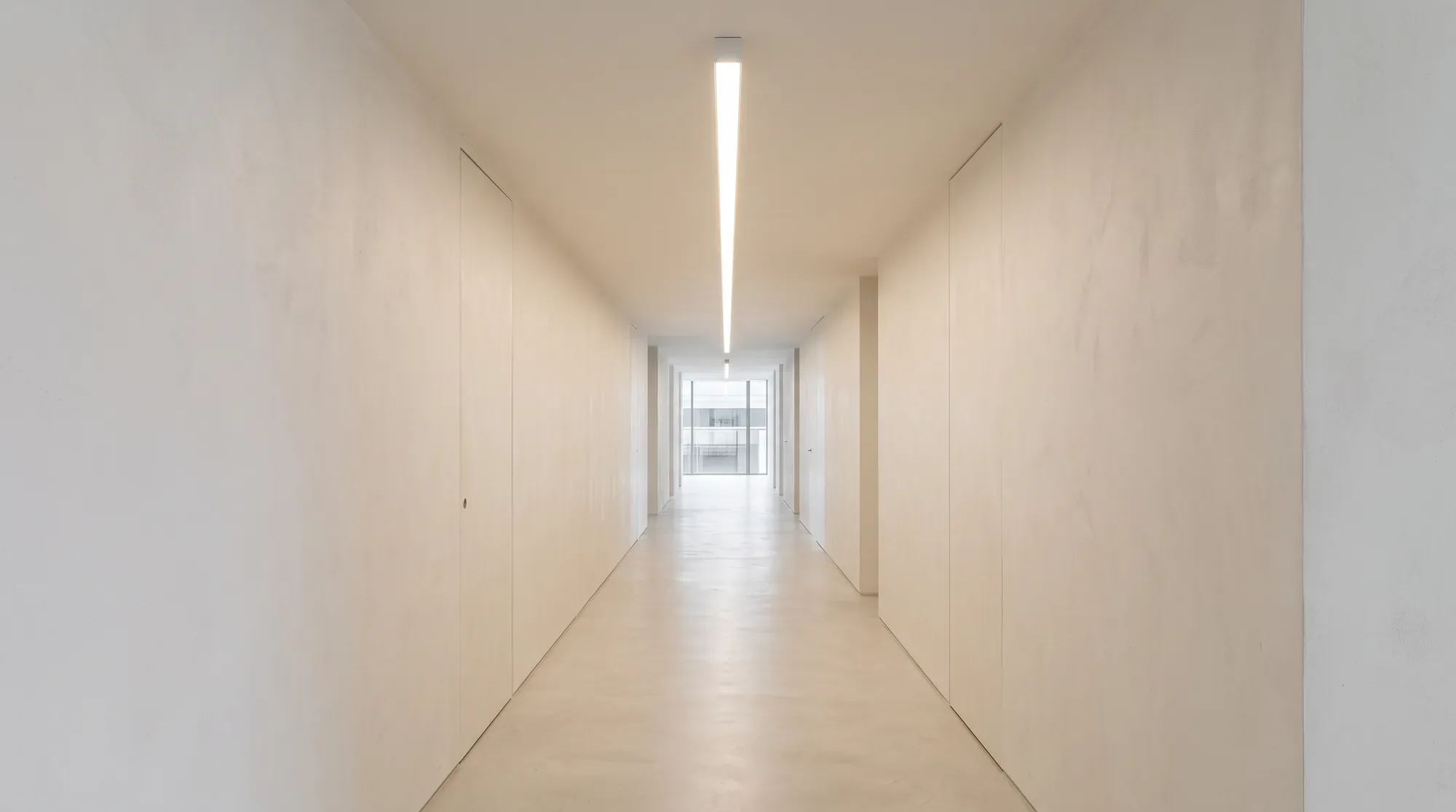
A continuous line connects thresholds, workstations and circulation routes. Its strength comes from not stopping.
The starting point
Continuity is built.
A line does more than repeat a module. It follows an axis, absorbs obstacles and keeps the same rhythm from one end to the other.
- Axis
- Rhythm
- Joints
What is lit
Circulation routes, open-plan offices and long rooms benefit from being crossed by a single line. It gives direction and avoids scattered points.
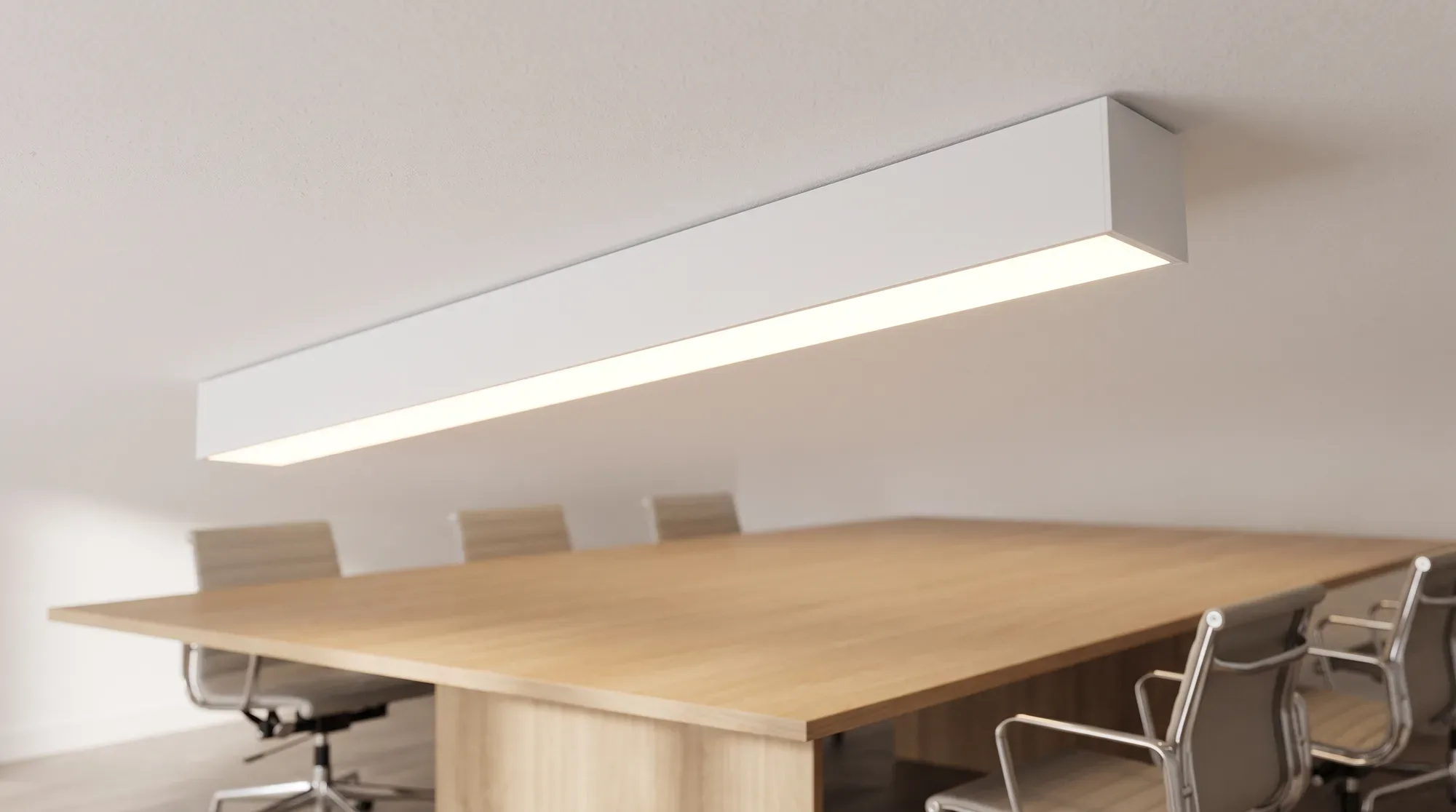
Furniture, partitions and changes of level interrupt or divert that line. The project decides where a break is intended and where the line stays continuous.
What the project decides
The length of the volumes, the heights and the circulation axes set the route. Joints, power feeds and suspensions are coordinated with the rest of the works.
A line that is too long without a break can tire the eye; a line broken too often loses its purpose. The balance is found on the plan.
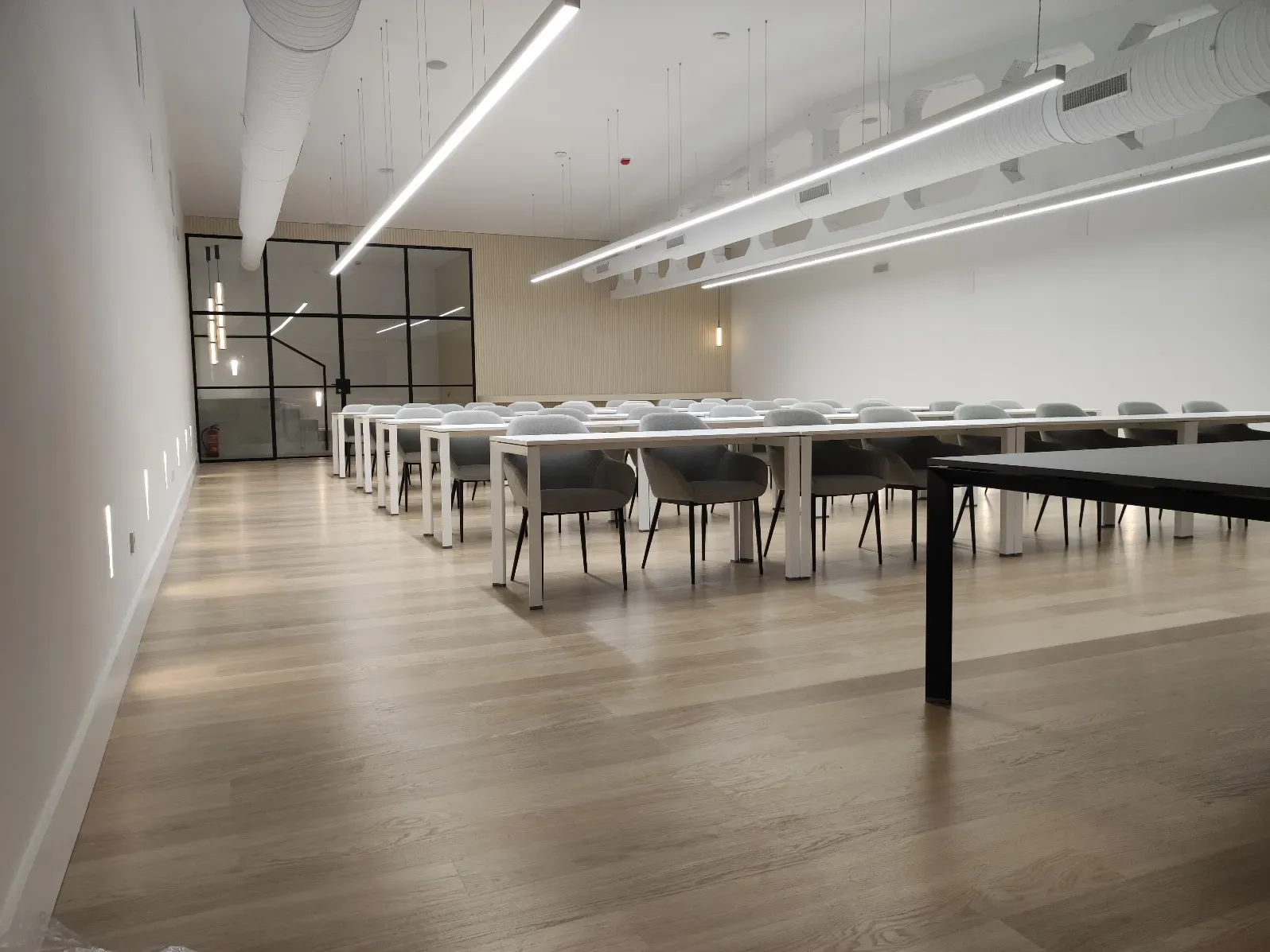
Continuity is read in the route, not in the length of the catalogue.
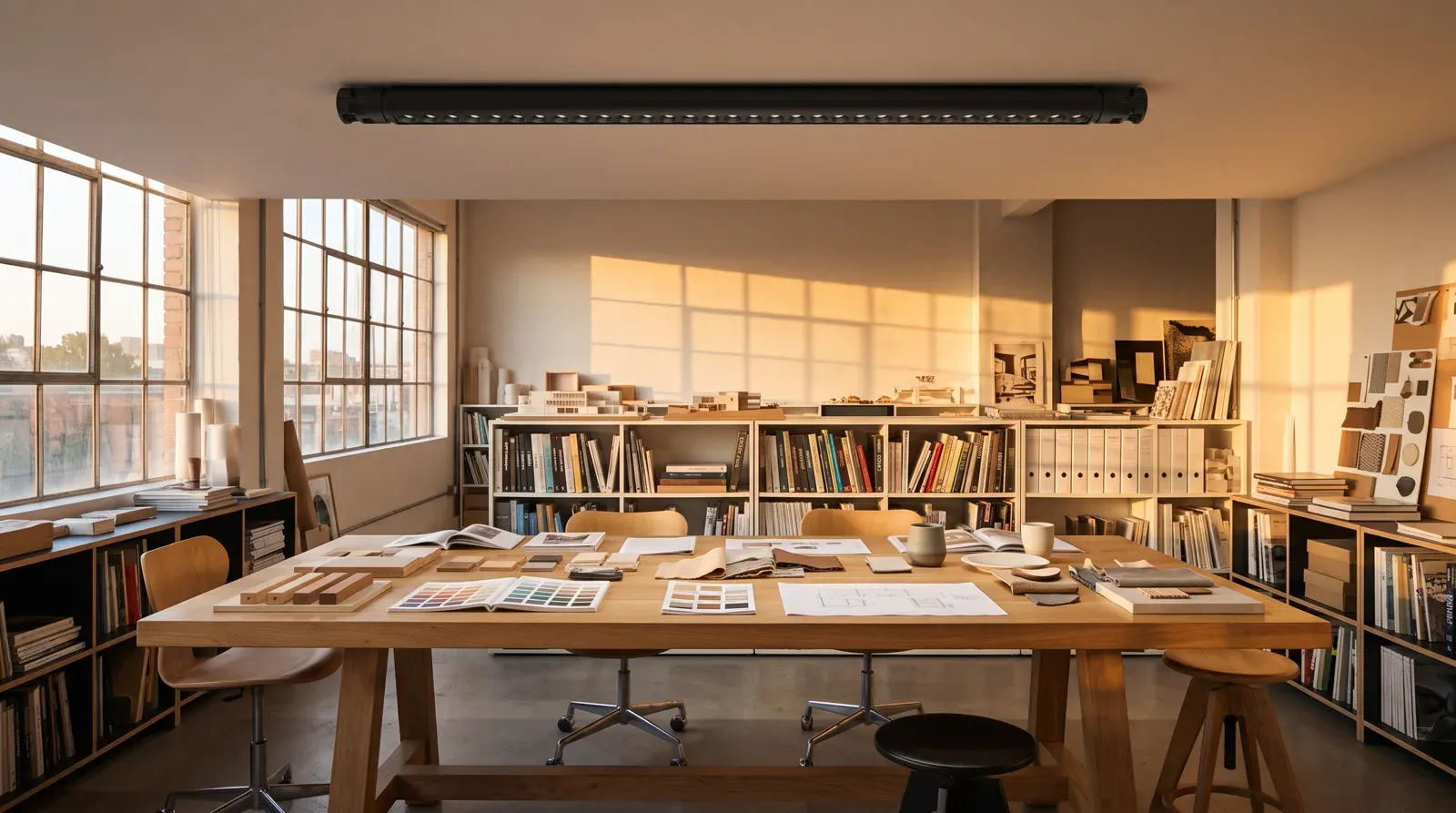
Photograph of a real installation
How it is approached
Axes, obstacles and power points are surveyed first. From there, a single line, parallel lines or a sequence-based composition are compared.
The solution is checked against the electrical and ceiling plans before openings are fixed.
What to avoid
- Multiplying modules without intent, ignoring ceiling changes and leaving joints to chance on site.
- A continuous line that is poorly prepared becomes a series of visible joints.
Composing a line.
Real Tualuce catalogue pages. The choice is defined with the project team.
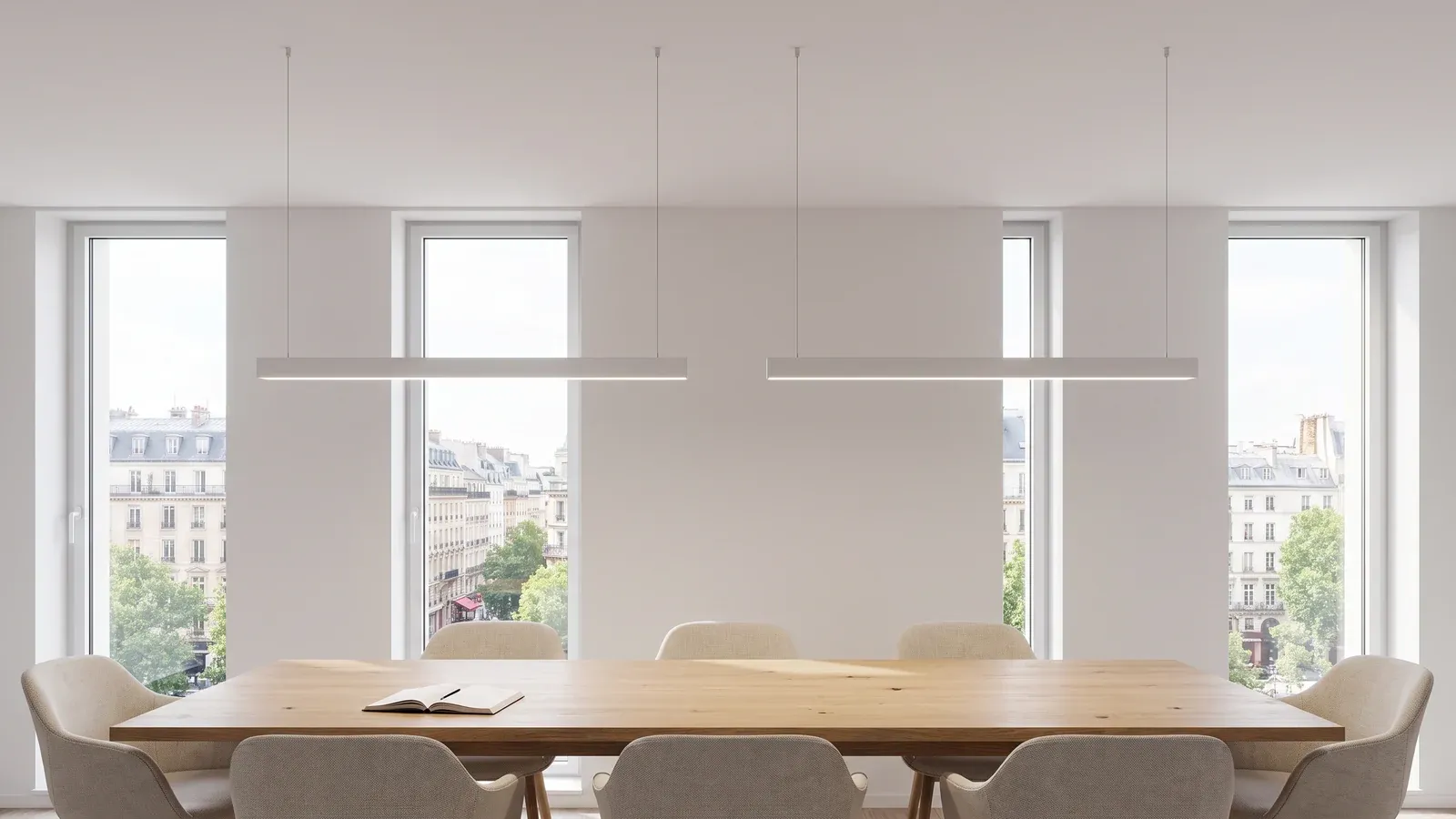
Support for your lighting project.
Lighting advice, lighting studies and customised projects to inform lighting choices based on the architecture and intended uses.
Lighting advice
Discuss the lighting intentions and needs of your project.
Lighting studies
Develop the lighting approach in relation to the architecture and its uses.
Customised projects
Explore a response shaped around the context and direction of your project.
Frequently asked questions
How is the route of a continuous line defined?
From circulation axes, heights, furniture and obstacles. The route is drawn on the plan before the modules are chosen.
Can interruptions be planned?
Yes. A line can stop to respect a structure, a partition or a change of use. The decision is made with the project.
When should the other trades be involved?
As soon as the route is settled, to coordinate power feeds, suspensions and ceiling openings.
Give light an axis
Tualuce supports the composition of continuous lines and the choice of references suited to your project.
Explore the Tualuce catalogue