
Strips
Professional LED strip
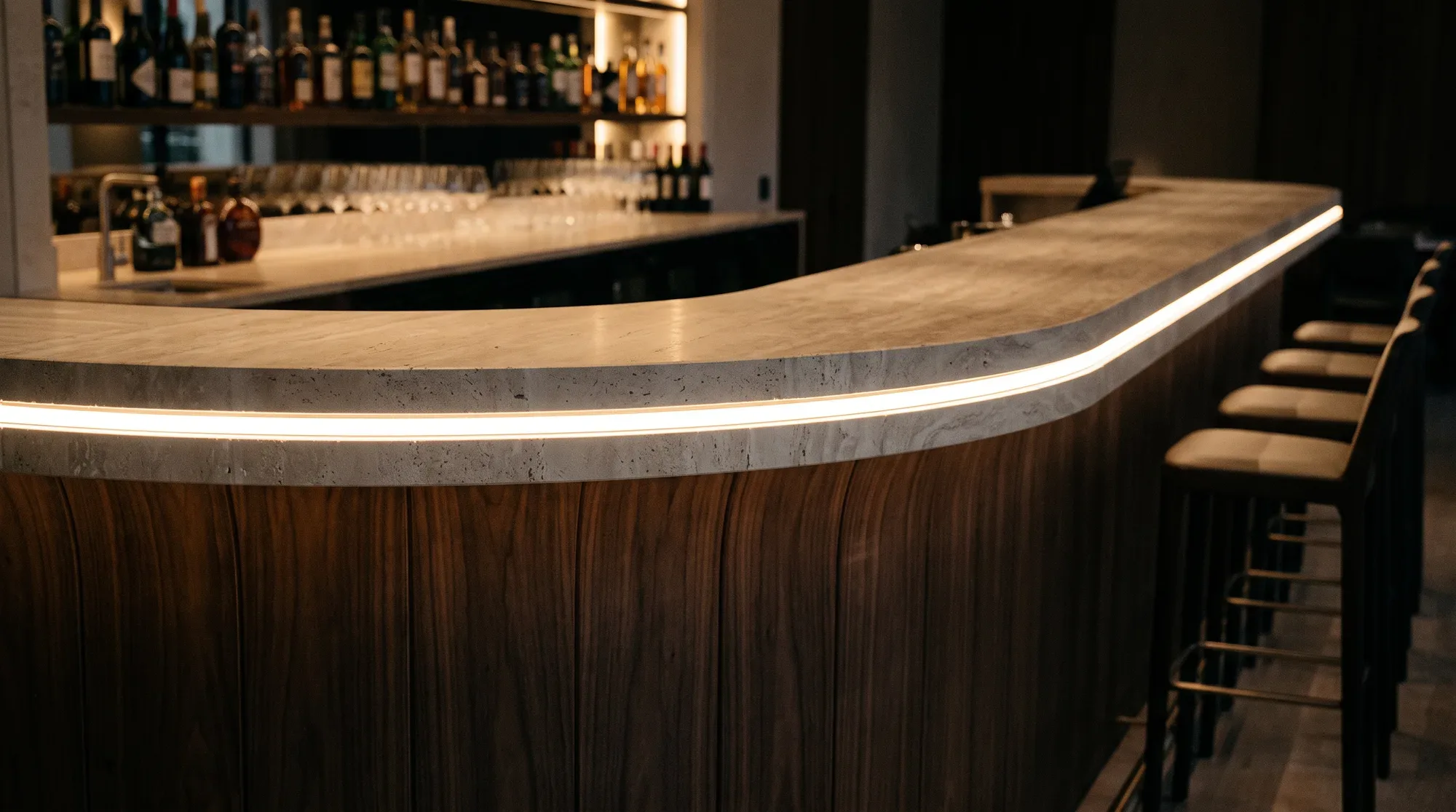
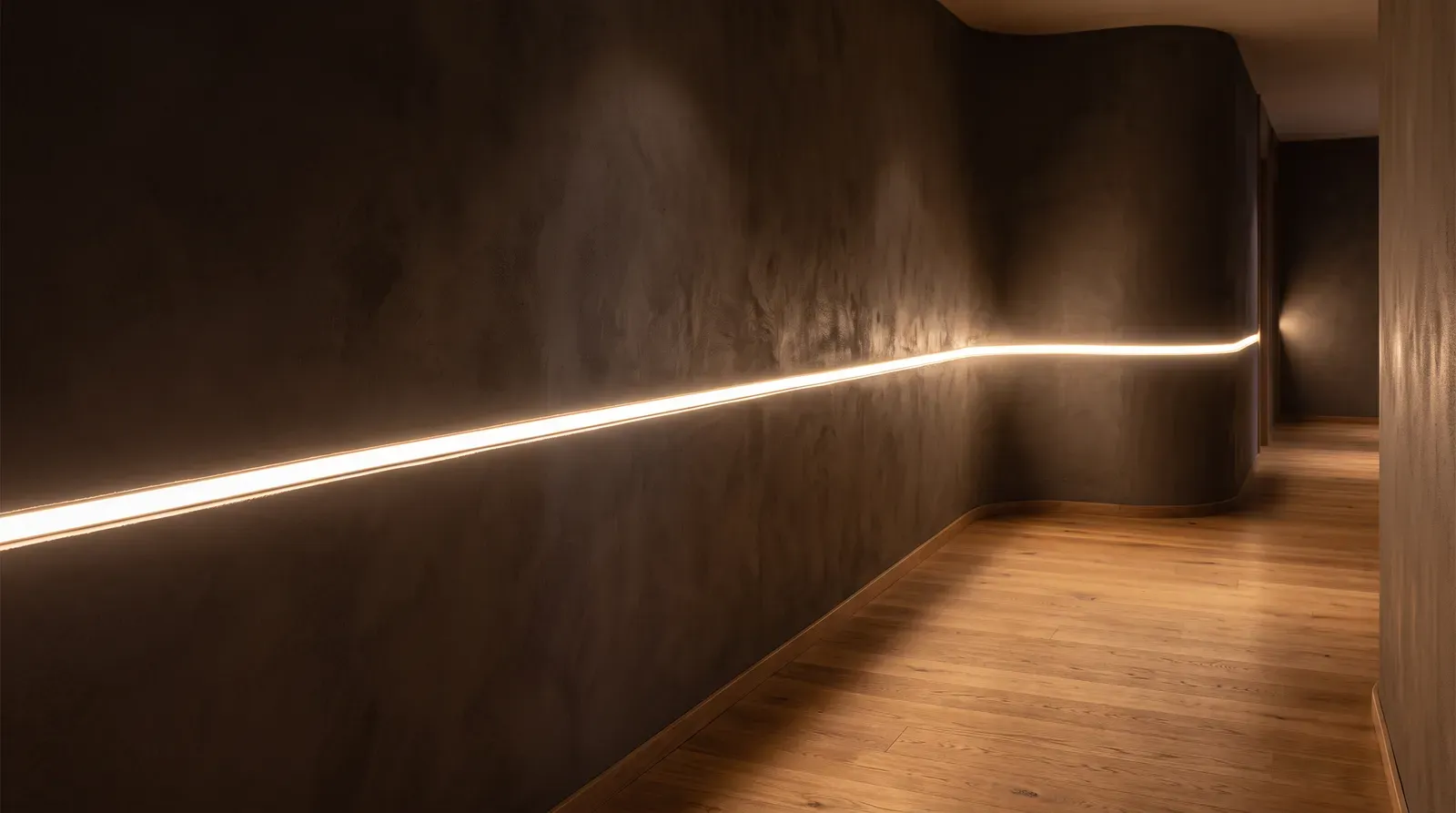
A strip follows curves, recesses and lines that a rigid profile cannot take. Its flexibility serves the drawing.
The starting point
The curve changes the line.
A strip is not installed like a profile. It follows a radius, an edge or a detail, and that freedom is what needs the most preparation.
- Curves
- Recesses
- Installation
What is lit
Counters, recesses, curved ceilings and architectural details take a strip where a straight line would be too rigid.
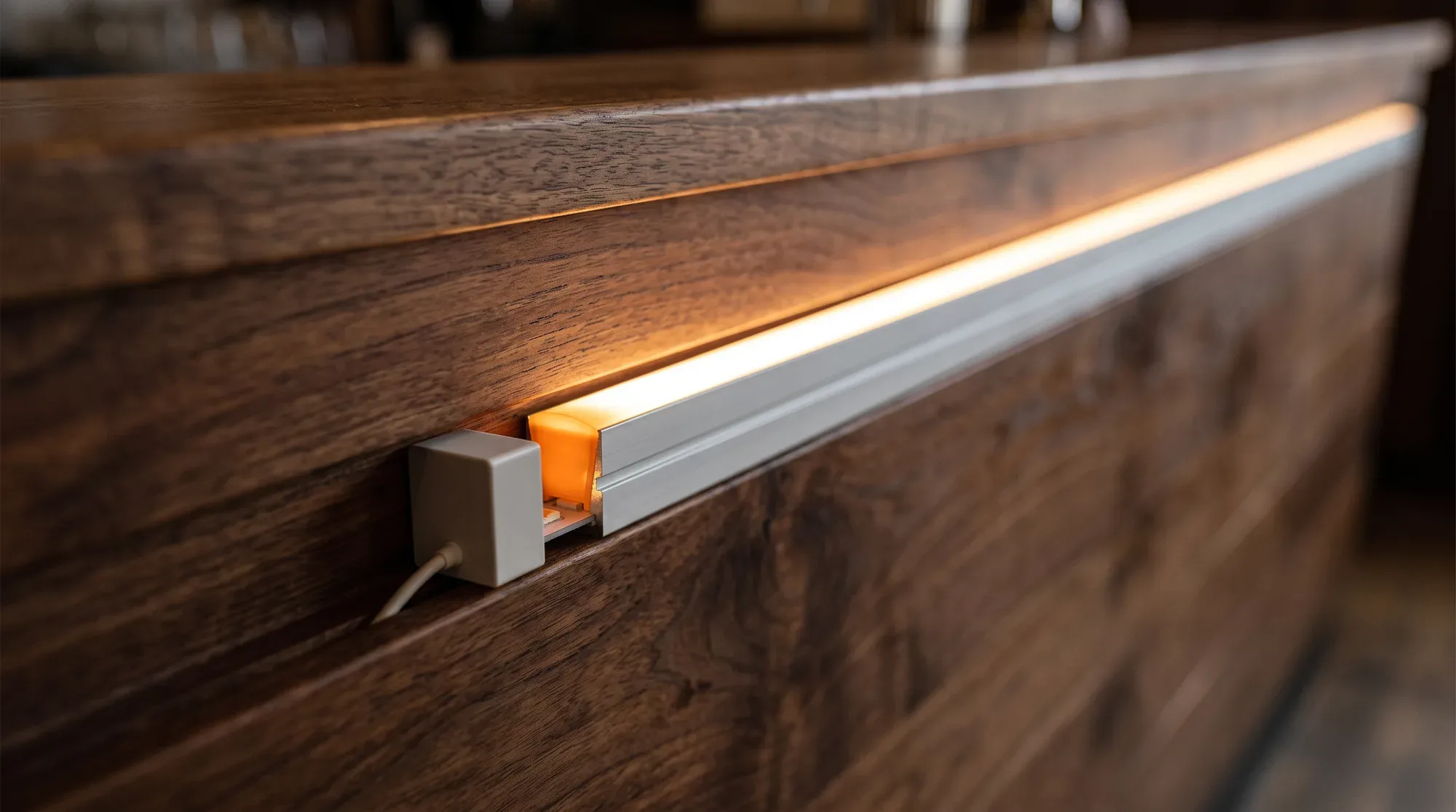
The strip can stay visible or sit inside a profile. Either way, the light is judged by the evenness of the curve and the finish at its ends.
What the project decides
Bend radius, fixing, power supply and access to the ends condition the installation. Supports must be ready before the strip arrives.
Finishes, joints and sequence lengths are decided with the contractor building the support.
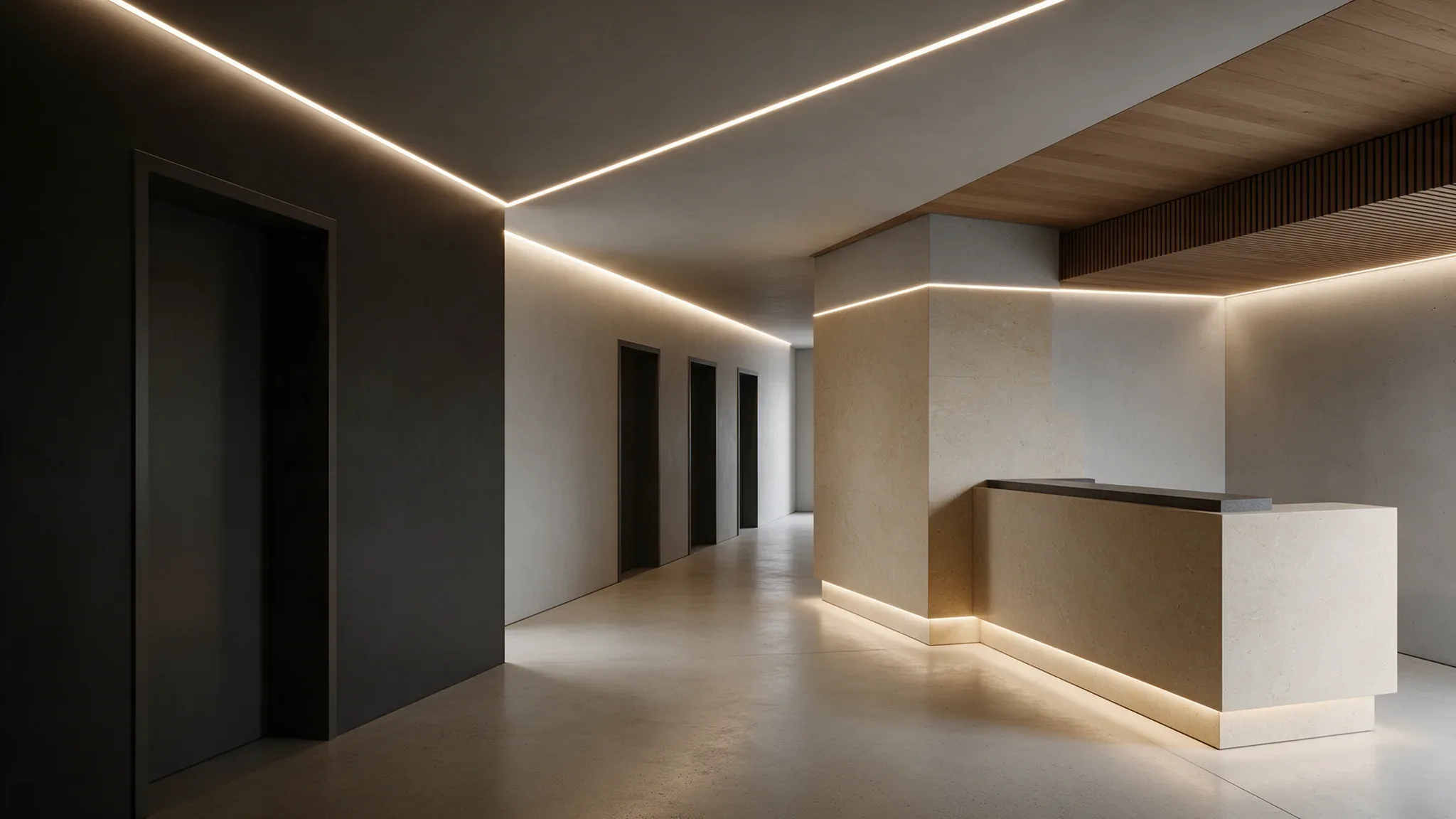
The curve is prepared on the support, not on site.
How it is approached
The work starts from the detail to be lit: a counter, a recess, a ceiling curve. Installation constraints and power points are checked on site or on the plans.
Samples and trials help confirm the colour and the result before ordering.
What to avoid
- Fitting a strip to an unprepared support, multiplying visible joints and choosing a curve without checking the permitted radius.
- A strip that is badly tensioned or badly powered is immediately visible, even in a dark room.
Strips and neon profiles.
Real Tualuce catalogue pages. The choice is defined with the project team.
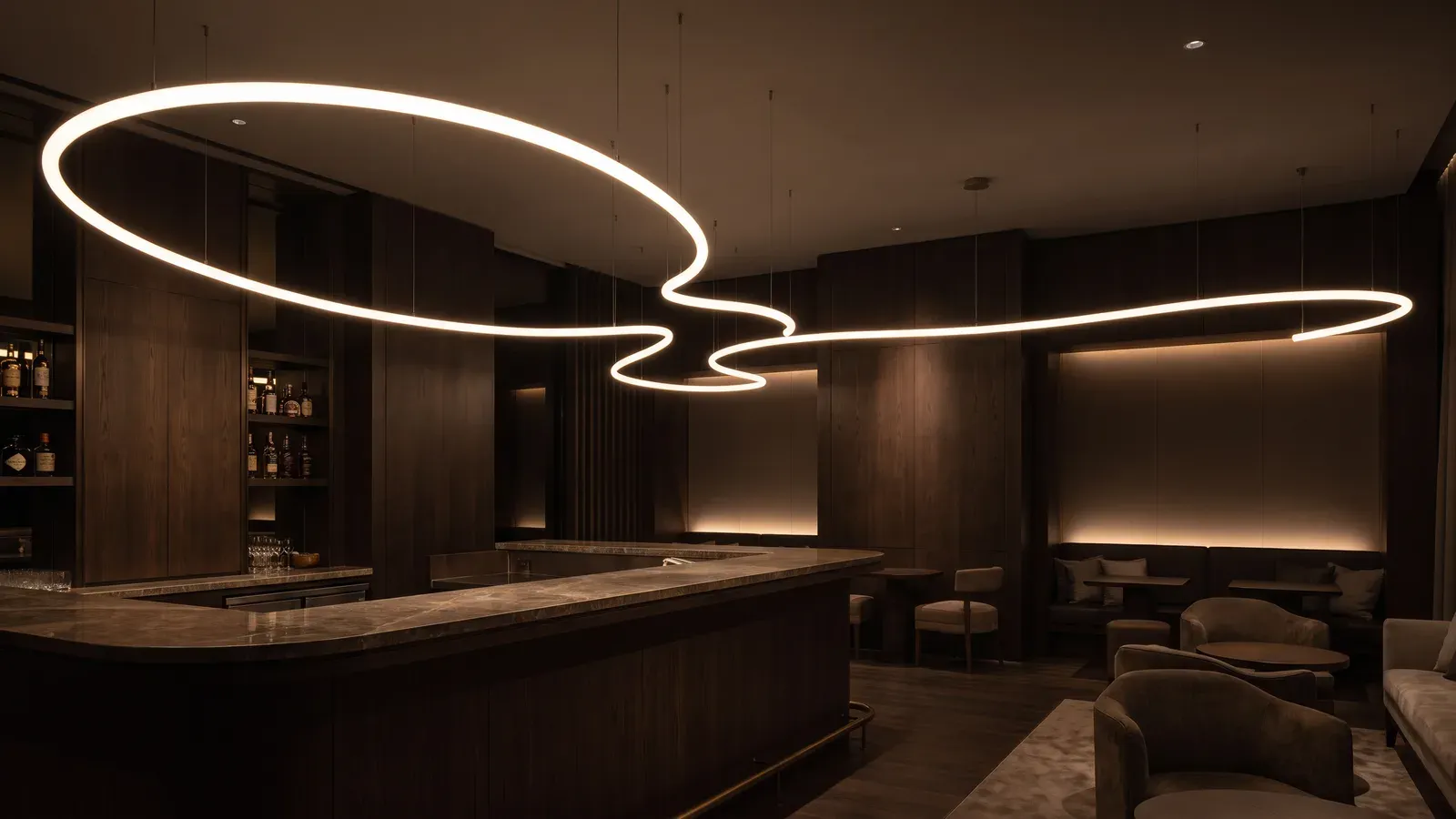
Support for your lighting project.
Lighting advice, lighting studies and customised projects to inform lighting choices based on the architecture and intended uses.
Lighting advice
Discuss the lighting intentions and needs of your project.
Lighting studies
Develop the lighting approach in relation to the architecture and its uses.
Customised projects
Explore a response shaped around the context and direction of your project.
Frequently asked questions
What information is needed for a strip?
The detail to be lit, the support, the bend radius, the power points and the intended finishes.
Does a strip always need a profile?
Not always. The strip can stay visible or sit inside a profile. The decision depends on the result, the support and maintenance.
How is the light colour confirmed?
With samples and a trial on the real support. Perception changes with the materials and the ambient light.
Give the detail its place
Tualuce brings together the strips, the profiles and the support to prepare your project.
Explore the Tualuce catalogue